Kanazawa One-Day Itinerary: How to See the Castle, Kenrokuen, and the Samurai and Geisha Districts

Contents
The Classic History Route to Cover on a First Trip to Kanazawa

Kanazawa was once the seat of the Kaga Domain, the domain known as Hyakumangoku (one million koku). During the Edo period, excluding the shogunate, the Maeda family of the Kaga Domain held the largest koku rating in Japan, koku being the measure of rice yield used to rank feudal domains. In today’s terms, that economic power is said to have reached the hundreds of billions of yen.
Kanazawa carries the traces of that history all through the city. There is so much of it that a guidebook can leave you unsure where to begin, and on a first trip you want to be certain you do not miss the essentials.
The domain poured its wealth into culture and the arts as well, and that is what shaped Kanazawa into the city of history and scenery it is today.
This article lays out the classic sightseeing route for taking in that history.
The Full Route Through Kanazawa’s Castle Town

The route below gathers the historic sites that no trip to Kanazawa should leave out.
| Time | Stop | Time needed |
|---|---|---|
| 9:00 am | Kanazawa Castle | 2 hours |
| 11:00 am | Kenrokuen | 40 minutes |
| 12:10 pm | Omicho Market | 50 minutes |
| 1:10 pm | Nagamachi Samurai District | 2 hours |
| 3:20 pm | Nishi Chaya District | 1 hour |
The time needed at each stop is based on how long I have spent there over many visits. Allow roughly this much and the day will not run far over.

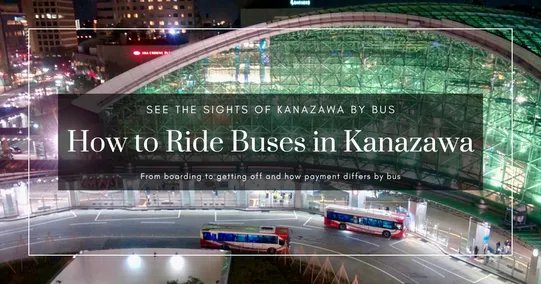
Travel between stops is by bus or taxi, and every leg takes anywhere from a few minutes to around fifteen. Bus routes cover the city and a single ride costs about ¥200 to ¥300. Taxis are easy to catch, with ranks at the entrances to the sights and plenty of cars on the road. Each leg comes to about ¥1,000, and you are free from departure times.
Read more about how to ride the sightseeing buses in Kanazawa
Kanazawa Castle: The Castle Grounds of Hyakumangoku
🕛 9:00 am
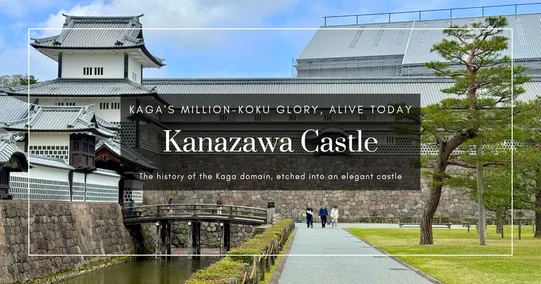
The day starts at the seat of Kaga Domain government. Kanazawa Castle is now open as Kanazawa Castle Park, and you can enter from early in the morning. The interiors of the gates and turrets open at 9:00 am.

Kanazawa Castle was the castle of the Maeda family, who governed the three provinces of Kaga, Noto and Etchu. From 1583 (Tensho 11), when Maeda Toshiie entered the castle, until the Meiji era, successive lords ruled the Kaga Domain from here. The castle town spread out around it and became the Kanazawa of today.
The highlights are the interiors of the gates and turrets, which you can walk through, and the many different styles of stone wall standing side by side. There is a large Japanese garden as well.

Read more about Kanazawa Castle
Kenrokuen: One of Japan’s Three Great Gardens, Where the Kaga Domain Received Its Guests
🕛 11:00 am
Leave Kanazawa Castle through the Ishikawa Gate, cross Ishikawa Bridge, and Kenrokuen is straight ahead. It is a few minutes on foot from the castle.

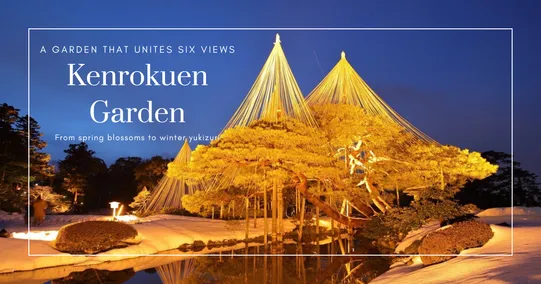
Kenrokuen is the garden the Kaga Domain shaped over generations to receive its guests. It is a nationally designated Special Place of Scenic Beauty and one of Japan’s Three Great Gardens, and its name comes from the six sceneries it brings together. The grounds are wide, so allow around an hour if you want to walk every corner. For a standard visit, 40 minutes is a good estimate.
Read more about Kenrokuen
Omicho Market: Lunch at the Townspeople’s Kitchen, Lined with Seafood
🕛 12:10 pm
Lunch is at the market. Omicho Market is about ten minutes from Kenrokuen by bus or taxi.

Omicho Market has supplied Kanazawa with food since the days of the castle town. About 170 shops stand side by side here, and its history runs 300 years. Locals call it Omicho, and it is still the kitchen of Kanazawa.
The stalls carry the catch of the Sea of Japan: nodoguro (blackthroat seaperch), sweet shrimp, and kobako crab in winter. Restaurants serving seafood bowls and sushi are gathered here, and you can also pick up Kanazawa oden or grilled skewers to eat as you go.


Read more about Omicho Market

Nagamachi Samurai District: Earthen Walls and Canals Where the Samurai Lived
🕛 1:10 pm
The afternoon moves to the quarter where the samurai lived, just west of Korinbo, the busiest part of Kanazawa.

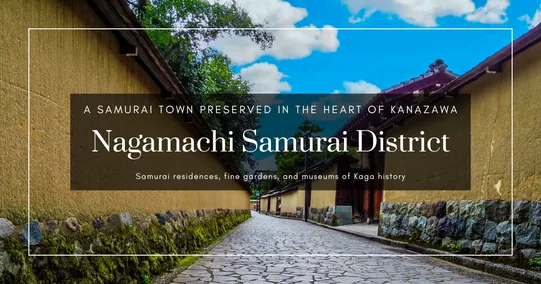
The Nagamachi Samurai District is the residential quarter where the samurai of the Kaga Domain lived. Kanazawa was spared wartime bombing, so the stone-paved lanes lined with earthen walls and the Onosho Canal running alongside them have been handed down as they were in the domain era.
Walking the streets is worthwhile on its own, but residences, gardens and museums are scattered through the area, and you can step inside to see how the Kaga samurai lived.

The back lanes weave in and out, so check the route below before you set off and you will not lose your way.
Read more about the Nagamachi Samurai District
Nishi Chaya District: Where Geisha Carry On Their Art in a District Sanctioned by the Kaga Domain
🕛 3:20 pm
The route closes in a geisha district. Nishi Chaya District sits in Nomachi, south of the Nagamachi Samurai District and Kanazawa Castle, across the Saigawa River.

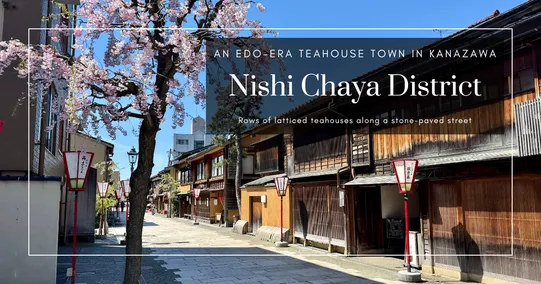
Nishi Chaya District is the teahouse town that the Kaga Domain officially sanctioned in 1820 (Bunsei 3). Two-story wooden teahouse buildings line the stone-paved street, and geisha still carry on their art here. It is one of Kanazawa’s three teahouse districts.
The street holds long-established rakugan (dry pressed sweets) shops, amanatto (sugared beans) specialists, and cafes and kappo restaurants set in converted teahouses. A museum you can enter free of charge is here too, so you can take an hour to walk it slowly with a pause for Japanese sweets.
Read more about the Nishi Chaya District
Cover the Classics and Kanazawa’s History Opens Up

The wealth of Hyakumangoku built the castle and the garden, and drew people and culture into the castle town. What this route traces are the places where that wealth took shape.
What was Hyakumangoku? The answer shows in the scale of the castle’s stone walls and in the making of the garden where the domain received its guests.

Travel between stops runs a few minutes to around fifteen by bus or taxi. Every site sits within a small area centered on Kanazawa Castle.
That is the classic sightseeing route through the history of Kanazawa. Enjoy your time in the city.
