A Half-Day Walking Tour in Hiroshima: 6 Essential Sights from Peace Park to Shukkeien Garden

Contents
Hiroshima Is Closer and Deeper Than You Think: Essential Spots for a Half-Day Tour
Where should you go when visiting Hiroshima? How can you experience its unique charm to the fullest? This guide introduces the must-see landmarks in Hiroshima City and an efficient model course to explore them all.
In just half a day, you can experience Hiroshima’s past, present, and hopes for the future by visiting six carefully selected spots, from the World Heritage-listed Atomic Bomb Dome to a serene traditional Japanese garden.
The distinctive feature of this course is that it can be completed entirely on foot from start to finish. We designed it to eliminate unnecessary transfers and travel time, allowing you to spend quality time at each location. The distances between spots are moderate, making for a pleasant walk without getting too tired.
We also provide detailed information on time needed at each spot, highlights, and a sample time schedule. Even first-time visitors to Hiroshima can enjoy a fulfilling half-day experience using this article as a guide.
A Popular Half-Day Walking Course Through Hiroshima City

The spots in this course are arranged so that you can walk from one to the next, allowing you to enjoy Hiroshima’s history, peace, culture, and nature all in one journey.
- Peace Memorial Park
- Hiroshima Peace Memorial Museum
- Atomic Bomb Dome
- Orizuru Tower
- Hiroshima Castle
- Shukkeien Garden
We will explain the detailed route later in this article. First, let us introduce each recommended sightseeing spot.
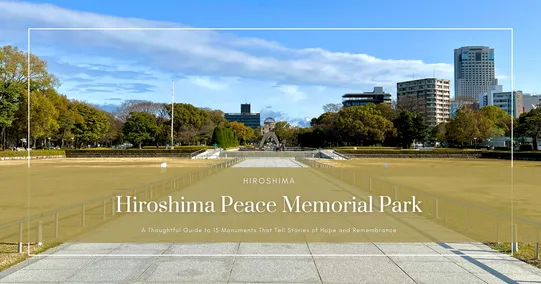
Peace Memorial Park: Where Prayers Quietly Blend with Tranquil Scenery

Located in central Hiroshima on a sandbar between the Motoyasu and Honkawa rivers, Peace Memorial Park was created to mourn those who lost their lives to the atomic bomb and to pray for lasting world peace.

Throughout the park, you will find numerous monuments and memorials, including the Cenotaph for Atomic Bomb Victims, the Flame of Peace, and the Children’s Peace Monument, which is always adorned with thousands of paper cranes. Walking through the park while sensing the prayers and wishes imbued in each monument naturally quiets the mind and invites reflection.

This is not just a tourist destination to visit briefly; it is a place to embrace the atmosphere you feel upon entering and the way your heart naturally becomes still before the memorials. Emotions that cannot be put into words quietly stand here alongside the landscape.

| Name | Peace Memorial Park |
|---|---|
| Hours | Open 24 hours (public park) |
| Closed | Open year - round |
| Address | Nakajima - cho, Naka - ku, Hiroshima City, Hiroshima Prefecture |
| Official Website | Peace Memorial Park - Hiroshima City Official Website |
Read more about Peace Memorial Park
Hiroshima Peace Memorial Museum: Time to Confront Peace, One Step at a Time

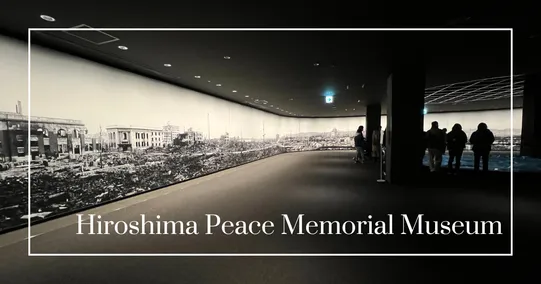
The Hiroshima Peace Memorial Museum, located within Peace Memorial Park, conveys the devastation of the atomic bomb dropped on Hiroshima on August 6, 1945, through an extensive collection of materials.
Inside the museum, you will find personal belongings of victims, photographs, scale models recreating the city as it was, and video testimonies that allow you to viscerally experience what happened. Each item seems to carry the voices of those whose daily lives were stolen away.

Many of the exhibits powerfully appeal to the emotions. This is a space that requires quiet contemplation with an open heart. Plan for about one hour here, and we recommend visiting with plenty of time to spare.

| Name | Hiroshima Peace Memorial Museum |
|---|---|
| Hours | [Mar - Jul] 7:30 am - 7:00 pm [Aug] 7:30 am - 8:00 pm [Sep - Nov] 7:30 am - 7:00 pm [Dec - Feb] 7:30 am - 6:00 pm |
| Closed | December 30 - 31 Mid - February (exhibit changeover period) |
| Address | 1 - 2 Nakajima - cho, Naka - ku, Hiroshima City, Hiroshima Prefecture |
| Official Website | https://hpmmuseum.jp/ |
Read more about Hiroshima Peace Memorial Museum
Atomic Bomb Dome: A Silent Testimony Standing Through Time

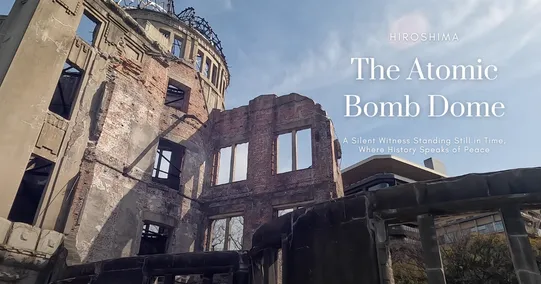
Near ground zero, the Atomic Bomb Dome stands quietly to this day. Once known as the Hiroshima Prefectural Industrial Promotion Hall, the building had its roof blown off by the atomic bomb on August 6, 1945, leaving behind only the exposed steel framework.
This structure has been preserved without demolition since the war and was registered as a UNESCO World Heritage Site in 1996. The deliberate choice to preserve rather than destroy it represents Hiroshima’s strong determination to never forget the past and to carry the wish for peace into the future.

From the riverside promenade, you can view the dome from various angles, and as the light changes throughout the day, so too does its impression. Simply gazing at it naturally quiets the heart, and you find yourself beginning to reflect on things within.

| Name | Atomic Bomb Dome |
|---|---|
| Hours | Open 24 hours |
| Closed | Open year - round |
| Address | 1 - 10 Otemachi, Naka - ku, Hiroshima City, Hiroshima Prefecture |
| Official Website | Atomic Bomb Dome - Dive! Hiroshima Official Tourism Site |
Read more about Atomic Bomb Dome
Orizuru Tower: Take a Break While Overlooking the City

Located right next to Peace Memorial Park, Orizuru Tower is a modern spot where you can enjoy present-day Hiroshima. From the observation deck on the top floor, you can take in a panoramic view of the Atomic Bomb Dome, Hiroshima cityscape, and distant mountains.

Inside the tower, you will find many engaging features to enjoy with all your senses: the “Orizuru Wall” where you can deposit paper cranes made with your wishes, a comfortable wooden deck where you can relax, and the “Sanpo-zaka” (Walking Slope) that gently winds down to the lower floors. The cafe offers drinks and sweets as well.
After the contemplative learning experience, this tower provides a welcome pause in your Hiroshima sightseeing rhythm, a place where you can unwind and take a breather.

| Name | Orizuru Tower |
|---|---|
| Hours | Observatory/Cafe 10:00 am - 6:00 pm Souvenir Shop 10:00 am - 7:00 pm |
| Closed | Open year - round |
| Address | 1 - 2-1 Otemachi, Naka - ku, Hiroshima City, Hiroshima Prefecture |
| Official Website | https://www.orizurutower.jp/ |
| @orizuru_tower |
Hiroshima Castle: A Waterside Castle Reflecting the Warring States Era

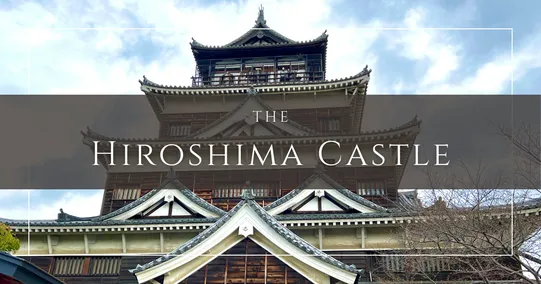
Hiroshima Castle was built in 1589 by Mori Terumoto, a feudal lord who ruled the Chugoku region, and is also known by its nickname “Rijo” (Carp Castle). This nickname is so deeply rooted in local culture that it became the origin of the name for the Japanese professional baseball team “Hiroshima Toyo Carp.”
The castle tower was reconstructed after the war to its original exterior appearance, and the interior is open to the public as a history museum. The exhibits allow you to explore Hiroshima’s development as a castle town and experience life in those times through weapons, old maps, and other artifacts.

The surrounding moat and stone walls are also beautiful, and the castle grounds reflecting each season’s nature are perfect for a leisurely stroll. Despite being right next to the city center, stepping inside the castle grounds gives you a sense of quiet, peaceful time.
Additionally, on March 29, 2025, a new commercial facility called "Hiroshima Castle Sannomaru" opened. It features restaurants serving Hiroshima specialties, shops selling traditional crafts, and facilities where you can try archery, offering entertainment through Japanese food and culture.
Please note that the castle tower will close on March 22, 2026, due to aging and earthquake resistance concerns. Only a limited time remains to enter the current tower interior. This is the last opportunity to enjoy the view from the observation room and see the samurai culture exhibits, so if you plan to visit, please do so soon.
| Name | Hiroshima Castle |
|---|---|
| Hours | Castle Tower [Mar - Nov] 9:00 am - 6:00 pm [Dec - Feb] 9:00 am - 5:00 pm Ninomaru [Apr - Sep] 9:00 am - 5:30 pm [Sep - Mar] 9:00 am - 4:30 pm |
| Closed | Irregular holidays |
| Address | 21 - 1 Motomachi, Naka - ku, Hiroshima City, Hiroshima Prefecture |
| Official Website | https://hiroshimacastle.jp/ |
| @hiroshima_castle |
Read more about Hiroshima Castle
Shukkeien Garden: A World of Tranquil Beauty in a Traditional Japanese Garden

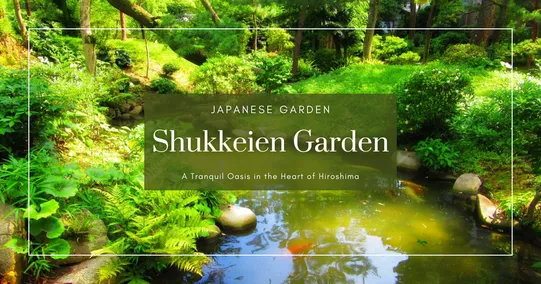
The final stop on our journey is Shukkeien, a garden that preserves Hiroshima’s traditional aesthetic beauty to this day. Created in the early Edo period by Asano Nagaakira, the lord of Hiroshima Domain, this pond-strolling garden retains much of the character of the grand gardens once belonging to feudal lords.

Within the garden, artificial hills, bridges, and teahouses are artfully arranged around the central pond, and the scenery transforms with each step you take. The gentle sound of flowing water, the play of shadows on the rock arrangements, and the meticulously maintained plantings naturally calm the hearts of visitors.
Here, you can forget the bustle and simply face the scenery and yourself. Visiting at the end of your journey creates a sense of peaceful space in your heart.

| Name | Shukkeien Garden |
|---|---|
| Hours | [Mar 16 - Sep 15] 9:00 am - 6:00 pm [Sep 16 - Mar 15] 9:00 am - 5:00 pm |
| Closed | December 29 - 31 |
| Address | 2 - 11 Kaminobori - cho, Naka - ku, Hiroshima City |
| Official Website | https://shukkeien.jp/ |
| @hiroshima_pref_art_museum |
Read more about Shukkeien Garden
Course Route and Transportation
This course can be completed entirely on foot from the starting point at Peace Memorial Park.

- Peace Memorial Park
- Hiroshima Peace Memorial Museum
- Atomic Bomb Dome
- Orizuru Tower
- Hiroshima Castle
- Shukkeien Garden
Spots 1 through 4 require almost no walking time between them, so you can enjoy sightseeing without worrying about bus or train schedules.
The final stop, Shukkeien Garden, is also only about a 10-minute walk from JR Hiroshima Station, so after completing the course, you can easily walk back to the station.
How to Get from Hiroshima Station to Peace Memorial Park
You can reach Peace Memorial Park from Hiroshima Station by streetcar or bus.
- Hiroden (Hiroshima Electric Railway): Take Line 1 from Hiroshima Station, get off at Fukuro-machi Station. 6-minute walk from there.
- Hiroshima Bus: Take Line 21 from Hiroshima Station, get off at Fukuro-machi bus stop. 6-minute walk from there.
- Meipuru - pu Sightseeing Loop Bus: Board at Hiroshima Station Shinkansen Exit, get off at Peace Park Mae [Peace Memorial Museum Mae] bus stop.
- There are three routes—Orange, Green, and Lemon—but all will get you there in about 15 minutes.

Recommended Time Schedule
Let us map out this course with actual time allocations. We recommend starting in the morning. Peace Memorial Park in particular tends to have fewer tourists in the morning, allowing you to explore in a quieter atmosphere.
| Time | Spot | Duration | Notes |
|---|---|---|---|
| 8:00 am | Peace Memorial Park | 60 min | Take your time walking among the various monuments and memorials, offering quiet prayers and reflecting on peace. |
| 9:00 am | Hiroshima Peace Memorial Museum | 60 min | View exhibits on the atomic bomb and war. Take in what the vivid records convey and face the meaning of peace. |
| 10:00 am | Atomic Bomb Dome | 30 min | World Heritage Site. The bomb detonated about 140m southwest and 600m above this point. A time to feel the preciousness of peace. |
| 10:30 am | Orizuru Tower | 60 min | Enjoy the view from the top - floor observation deck and take a break at the cafe. Souvenirs available. |
| 11:45 am | Hiroshima Castle | 60 min | Experience Japanese history. Besides the tower, try archery and savor Hiroshima specialties at Sannomaru. |
| 1:00 pm | Shukkeien Garden | 60 min | Appreciate the beauty of a Japanese garden. Enjoy a peaceful stroll. |
| 2:15 pm | Hiroshima Station | 10 - minute walk from Shukkeien. Alternatively, head south to shopping areas like Hatchobori. |
Experience Hiroshima’s History and Culture in a Day: A Peace Journey to Remember
This walking tour through Hiroshima City allows you to encounter the city’s many facets in just half a day.
At Peace Memorial Park and the Atomic Bomb Dome, quietly confront past events. From Orizuru Tower, survey the cityscape that has achieved remarkable recovery. At Hiroshima Castle, touch the history of the Warring States period. At Shukkeien Garden, immerse yourself in traditional Japanese beauty.
This journey distills what Hiroshima wishes to convey: a hope for peace and a richness of culture.
To enjoy Hiroshima’s distinctive food culture, we recommend extending your trip after the course to entertainment districts like Hatchobori or Hondori Shopping Street. Please taste Hiroshima through okonomiyaki (savory pancakes), oyster dishes, local sake, and more.
The scenery that unfolds as you walk step by step, the passing of time, and what you feel along the way—we hope this course becomes a memorable experience in your heart as you visit Hiroshima.
