How Long Does Beppu's 7 Hells Tour Take? Timed & Tested

Contents
A Complete Report on Conquering All 7 Beppu Hells

In Beppu City, Oita Prefecture, there are hot spring vents called “jigoku” (hells). Visiting 7 of these locations, known as “Beppu Jigoku Meguri” (Beppu Hell Tour), is a classic sightseeing course in Beppu.
However, some of these 7 locations are spread apart, so visiting them all requires a fair amount of time.
This time, we started at 8:00 AM when the sites opened and visited all 7 hells to measure exactly how long it takes.
For efficient routes and details about each hell, check out our comprehensive guide below. We followed the method introduced there for this timed test.
Read more about Beppu Hell Tour Strategy

Actual Time Required

To get straight to the point: it took 3.5 hours to visit all 7 locations. This included leisurely sightseeing, enjoying foot baths, and shopping for souvenirs.
| Hell Name | Time Spent |
|---|---|
| Tatsumaki Jigoku | 10 min |
| Chinoike Jigoku | 40 min |
| Shiraike Jigoku | 20 min |
| Oniyama Jigoku | 12 min |
| Kamado Jigoku | 22 min |
| Oniishibozu Jigoku | 13 min |
| Umi Jigoku | 35 min |
| Total | Approx. 2 hours 30 min |
We traveled by rental car, and including travel time and breaks, the total was 3.5 hours. For food, we only grabbed onsen eggs cooked by geothermal heat and Umi Jigoku’s famous “Gokuraku Manju” (paradise buns) as quick snacks, so allow more time if you plan to have a proper lunch at a restaurant or cafe.
The 7 hells are divided into two areas: Shibaseki Onsen area (Tatsumaki Jigoku and Chinoike Jigoku) and Kannawa Onsen area (Shiraike Jigoku, Oniyama Jigoku, Kamado Jigoku, Oniishibozu Jigoku, and Umi Jigoku). We started from the Shibaseki Onsen area and then moved to the Kannawa Onsen area.
Tatsumaki Jigoku: Erupting with a Thunderous Roar
Following the strategy guide, we first headed to Tatsumaki Jigoku in the Shibaseki Onsen area.

🕐️ 8:00 am

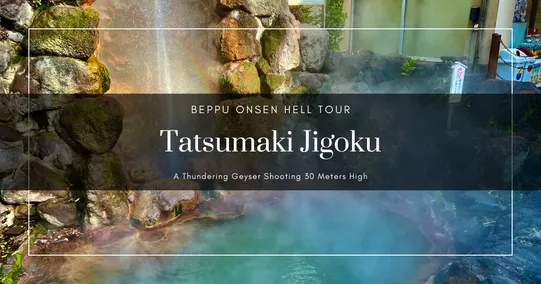
Tatsumaki Jigoku features a geyser that erupts approximately 30 meters high every 30-40 minutes.
Timing is largely a matter of luck at this hell, and depending on when you visit, you may have to wait. We called ahead to check and were lucky enough to arrive just before an eruption, so we could see the geyser with almost no waiting time. The steam shooting up with a thunderous roar was truly impressive.

Time spent: just over 10 minutes.
Read more about Tatsumaki Jigoku
Chinoike Jigoku: Dyed Crimson Red
🕐️ 8:15 am
Our second stop was Chinoike Jigoku (Blood Pond Hell).
Chinoike Jigoku is adjacent to Tatsumaki Jigoku and can be reached in about 2 minutes on foot.


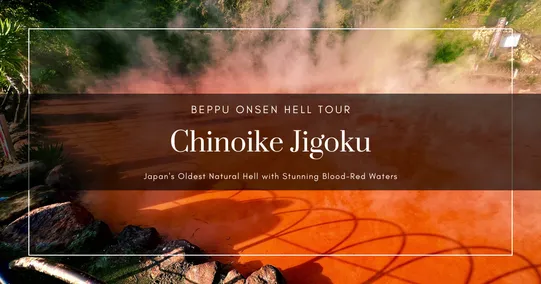
This is Japan’s oldest natural hot spring hell, and the sight of the entire pond dyed crimson red is stunning.

Combined with the steam rising from the approximately 78°C hot spring, it looks like hellfire itself. We also viewed it from the observation deck on the hill. The crimson pond glimpsed through the rising steam creates an atmosphere as if demons or devils might emerge at any moment.
Time spent: approximately 40 minutes.
Chinoike Jigoku has the only restaurant in the Hell Tour called “Gokurakutei,” so if you want to eat here, plan for about 1.5 hours.
Read more about Chinoike Jigoku
Moving to the Kannawa Onsen Area

After a short break at Chinoike Jigoku, we drove from the Shibaseki Onsen area to the Kannawa Onsen area. Finding an available parking spot took about 15 minutes total.

All 5 hells in the Kannawa Onsen area can be visited on foot.
Each of the 5 hells has its own parking lot, but they’re so close together that there’s no need to move your car between them. Plus, parking lots get crowded, so constantly changing lots may result in waiting for a spot.
With this in mind, we recommend using one parking lot as your base. The most convenient parking lot for walking to all locations is the Oniyama Jigoku parking lot.

874-0041 Kannawa, Beppu City, Oita Prefecture
From this parking lot, all 5 hells are easily accessible on foot.

Onsen Eggs on Miyuki-zaka Slope
Miyuki-zaka, the street connecting Oniyama Jigoku parking lot to Shiraike Jigoku, is lined with many shops.


We found a shop selling eggs cooked using hot spring heat and steam and decided to try one (100 yen each). Eggs cooked by geothermal heat are exceptional - definitely give them a try!


Shiraike Jigoku: Turquoise Blue with Wabi-Sabi Elegance
Our third stop was Shiraike Jigoku.

🕐️ 9:10 am
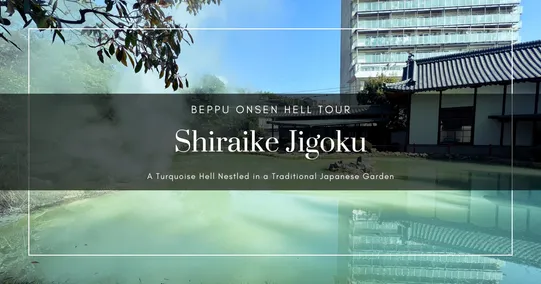
Shiraike Jigoku is characterized by its beautiful pale blue hot spring and Japanese garden. When you think of “hell,” you might imagine a frightening place, but Shiraike Jigoku is the complete opposite. The turquoise-blue pond exudes a beauty with a sense of wabi-sabi.

What surprised us was the tropical fish building. The giant arapaima, kept using geothermal heat, measures 1.7 meters long and was extremely popular with children.

Time spent: approximately 20 minutes.
Read more about Shiraike Jigoku
Oniyama Jigoku: Home to 70 Crocodiles
Our fourth stop was Oniyama Jigoku.

🕐️ 9:35 am

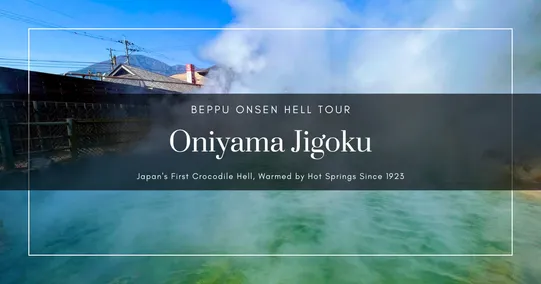
At Oniyama Jigoku, you can see 8 tons of hot spring water gushing out every hour with a bubbling sound. There’s so much steam that depending on the wind direction, you might not be able to see your surroundings.

Oniyama Jigoku is also known as “Crocodile Hell.” Using geothermal heat, approximately 70 crocodiles are kept here, allowing visitors to observe them up close.

Time spent: 12 minutes.
Read more about Oniyama Jigoku
Kamado Jigoku: 6 Hells and Paradise Experiences
Our fifth stop was Kamado Jigoku.

🕐️ 9:50 am

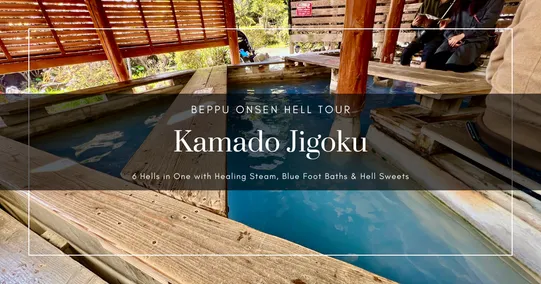
This is the most entertainment-oriented of all 7 hells. With 6 different hells numbered from 1-chome to 6-chome, you can enjoy blue hot springs, red hot springs, and mud hot springs all in one place.

In the “Paradise Area,” you can enjoy beauty steam treatments and soak in a bright blue hot spring foot bath. The shop’s “Soy Sauce Pudding” is extremely popular, especially with women, and the area was bustling with people enjoying sweets while soaking their feet.

Time spent: 22 minutes.
Read more about Kamado Jigoku
Oniishibozu Jigoku: Bubbling Gray Hot Mud
Our sixth stop was Oniishibozu Jigoku.

🕐️ 10:20 am
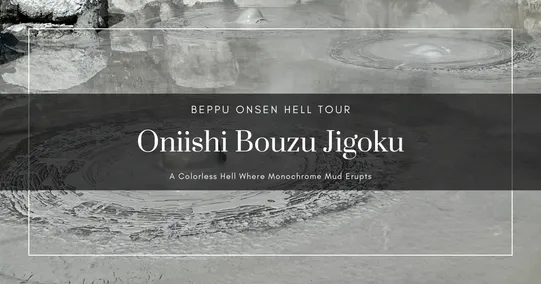
This is the only “colorless” hell among the 7. The sight of gray hot mud bubbling up like bald monk heads is, in a way, the most hell-like scene of all.

Another highlight is the “Oni no Takabiki” geyser, where 100°C steam shoots up with a loud sound like a demon’s snore. The grounds are compact, so it doesn’t take long to see everything.

Time spent: 13 minutes.
Read more about Oniishibozu Jigoku
Umi Jigoku: Stunning Cobalt Blue
For the final, seventh stop of our Beppu Hell Tour, we visited Umi Jigoku (Sea Hell).

🕐️ 10:35 am

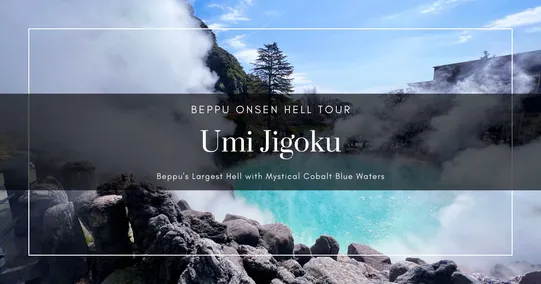
This is the largest of all the Beppu hells. The cobalt blue hot spring looks like a tropical sea, yet despite its beauty, it contains boiling water at 98°C.

The gift shop “Shop REN” has a wide selection, including Beppu-exclusive designed barley shochu “Enma,” making souvenir shopping enjoyable.

Another shop in the garden sells the famous “Gokuraku Manju” (Paradise Buns). These bite-sized treats are easy to eat and make a perfect snack while exploring.

Time spent: 35 minutes.
Read more about Umi Jigoku
Test Complete! Spend Half a Day Enjoying These Extraordinary Sights

Our Beppu Hell Tour that started at 8:00 am was completed at 11:30 am after visiting all 7 hells.
The actual time required was 3.5 hours.
Even with detours to eat onsen eggs and browse souvenirs at shops, we completed the entire tour within the morning. However, since we didn’t have a proper meal, you should probably plan for about 4 hours for the Beppu Hell Tour.
If you’re planning to visit the Beppu hells, use this as a reference for your timing.
