What Is a Samurai? History, Bushido, and the Warrior Culture of Japan

Contents
What the World Knows as “Samurai” — and What They Really Were

“Samurai” is now a word recognized worldwide. Most people picture a fierce warrior wielding a sword.
But the real samurai were far more than fighters. They governed provinces, pursued scholarship, practiced the tea ceremony, and composed poetry.
So what exactly were the samurai — the people who shaped Japanese politics and culture for roughly 700 years?
What Is a Samurai? — Etymology and the Difference Between Samurai and Bushi

Today, “samurai” and “bushi” are used almost interchangeably, but they originally meant different things.
“Bushi” was a general term for people whose profession was warfare. “Samurai,” on the other hand, referred only to higher-ranking warriors who served a specific lord.
The word comes from the classical Japanese verb saburau, meaning “to attend upon a noble person.” In other words, a masterless samurai (ronin) or a foot soldier (ashigaru) fighting on the front lines was a bushi but not a samurai.
This distinction faded during the Edo period (1603–1868). As the long peace continued and most warriors came to serve the shogun or a feudal lord (daimyo), the line between the two terms blurred.
Samurai History — From Birth to End

Born as bodyguards for the aristocracy, samurai eventually became the rulers of Japan before disappearing with the tides of history. Here is their story, era by era.
Origins: From Noble Bodyguards to Warrior Bands (Heian Period)
The origins of the samurai trace back to around the 10th century during the Heian period (794–1185). As the imperial court lost control over the provinces, regional leaders began arming themselves or recruiting skilled fighters as retainers.
These armed bands grew in organizational strength through military conflicts in the Tohoku region, such as the Former Nine Years’ War and the Latter Three Years’ War, eventually becoming a force too powerful for the court to ignore.
Establishing Warrior Rule (Kamakura and Muromachi Periods)
At the end of the 12th century, Minamoto no Yoritomo established the Kamakura shogunate — a warrior-led government based in Kamakura. With this, the samurai transformed from mere fighters into rulers who governed lands and enacted laws.
A feudal relationship in which lords granted land and vassals repaid them with loyalty and military service became the foundation of samurai society. This system was known as goon to hoko — a system of mutual obligation between lord and vassal, similar to the feudal contracts of medieval Europe.
The Warring States Period
In 1467, the Onin War — a succession dispute among feudal lords that devastated Kyoto — plunged Japan into roughly a century of civil war known as the Sengoku period. It was an age where ability was everything; even those of low birth could rise through military achievement.
The three great unifiers — Oda Nobunaga, Toyotomi Hideyoshi, and Tokugawa Ieyasu — each drove the nation toward unification, eventually ushering in 260 years of peace.
Peace and Transformation (Edo Period)
In 1603, Tokugawa Ieyasu established the Edo shogunate. With roughly 260 years of peace, the role of the samurai shifted dramatically from that of a warrior. (The details of this transformation are explored in the next section.)
The End: The Meiji Restoration and the Sword Abolishment Edict
The Meiji Restoration of 1868 brought the age of the samurai to a close. The new government dismantled the feudal system and issued the Sword Abolishment Edict (Haitorei) in 1876, banning samurai from carrying swords — the very symbol of their status.
The following year, in 1877, the Satsuma Rebellion led by Saigo Takamori was crushed, bringing the era of the warrior and the sword to a definitive end.
Daily Life of Samurai in the Edo Period

How did samurai live in a time without war? Let us look at the social structure of the Edo period and the daily lives of samurai.
Social Hierarchy and Population
Edo-period society had a status hierarchy with warriors at the top. Yet the warrior class made up only about 5–7% of the total population. The vast majority were farmers, accounting for roughly 85%. Despite being a minority, the samurai monopolized political, administrative, and judicial power as a ruling elite.
There were also ranks within the samurai class itself. Below the shogun came the feudal lords (daimyo), the bannermen (hatamoto), and domain retainers (hanshi). At the bottom, foot soldiers (ashigaru) were strictly distinguished from true samurai.
Education in Both Letters and Arms
Samurai children received rigorous education from an early age. In many domains, they entered domain schools (hanko) around the age of 7 or 8, where they studied the Four Books and Five Classics of Confucianism while also training in martial arts such as swordsmanship, archery, and horsemanship.
“Bunbu ryodo” — mastery of both scholarly and martial pursuits — was not a mere slogan but the fabric of daily samurai life. Scholarship formed the foundation of governance, while martial training disciplined the spirit. Only by cultivating both could a samurai truly be a samurai.
Bushido — The Spiritual Foundation of the Samurai

Bushido is the codified ethical framework that samurai were expected to follow. Interestingly, the Bushido code was not formalized during an era of warfare but during the peaceful Edo period. Precisely because there were no longer battles in which to risk their lives, samurai needed to redefine what it meant to be a warrior in spiritual terms.
Bushido synthesized the Confucian ideals of hierarchical order and filial loyalty, the Zen Buddhist pursuit of mental discipline and acceptance of death, and the Shinto emphasis on purity — integrating all of these into a code of conduct for samurai. In 1899, Nitobe Inazo distilled its essence into seven virtues in his English-language work, Bushido: The Soul of Japan.
- Righteousness (gi) — Acting according to moral principle, not personal gain
- Courage (yu) — Carrying out what one believes is right without fear
- Benevolence (jin) — Showing compassion to the weak precisely because one is strong
- Respect (rei) — Expressing consideration for others through proper conduct
- Sincerity (makoto) — Aligning words with actions
- Honor (meiyo) — Taking responsibility for one’s actions and knowing shame
- Loyalty (chugi) — Maintaining unwavering devotion to one’s lord
The catalyst for Nitobe writing this book was a question posed by the Belgian jurist Emile de Laveleye: “How do you teach morality in Japan without religious education?” Nitobe’s answer was Bushido.
Japanese Culture Shaped by Samurai
Samurai were warriors and cultural stewards at the same time. From arms and armor to the fine arts, here is the culture that samurai created and refined.
Swords and Armor — Weapons as Works of Art

The Japanese sword was called “the soul of the warrior” and held a significance far beyond that of a weapon. Wearing a long sword (uchigatana) and a short sword (wakizashi) together at the waist — known as the paired long and short swords (daisho) — was the defining image of the samurai.

Armor (kacchu) also combined protective function with artistic beauty. The helmet crest (maedate) expressed the personality and beliefs of its wearer, serving as a statement of identity on the battlefield.
Tea Ceremony, Noh Theater, and Calligraphy — Warriors as People of Culture
Samurai cultivated a wide range of cultural arts alongside their martial training.

The tea ceremony (sado) is a cultural practice rooted in the wabi-cha aesthetic perfected by Sen no Rikyu.
The entrance to the tea room, called the nijiriguchi, is a small crawl-through opening — about 66 cm (26 inches) square — deliberately built so that anyone, regardless of rank, must remove their sword and bow their head to enter. Feudal lords who faced each other as enemies on the battlefield met as equals in the tea room. This reflects the spirituality that samurai sought in the way of tea.

Noh theater was protected and developed as the official performing art (shikigaku) of the warrior class. Its pursuit of yugen — a profound, mysterious beauty — was deeply connected to the samurai spirit.

Calligraphy (shodo) was also an essential accomplishment for samurai. The ability to write letters and official documents beautifully was both a mark of education and a practical skill.
The Samurai Spirit in Modern Japan

The samurai as a social class no longer exists, but their spirit lives on in Japanese society in various forms.
The ethic of loyalty has been inherited as a strong sense of belonging to one’s company in modern Japanese business culture. The martial arts principle of “beginning and ending with a bow” also underpins business etiquette seen in practices such as the exchange of business cards and formal greetings.
The word “samurai” is also used to express Japanese pride and strength, as symbolized by the national baseball team’s nickname, Samurai Japan.
In entertainment, director Akira Kurosawa’s Seven Samurai (1954) left an enduring mark on world cinema. More recently, the video game Ghost of Tsushima and the television series SHOGUN (2024) have resonated strongly with international audiences.
In these ways, the samurai remains one of the most powerful vehicles for sharing Japanese culture with the world.
Where to Experience Samurai Culture in Japan

Trying on authentic armor, cutting straw targets with a real Japanese sword, viewing Edo-period weapon collections — samurai cultural experiences are offered throughout Japan, in cities including Tokyo, Kyoto, Osaka, and Kumamoto.
Armor experiences at castles range from a quick try-on of just a helmet (kabuto) and war surcoat (jinbaori) to a full armor dressing. Test cutting and swordsmanship sessions are led by professional instructors, so even first-timers are welcome.
| Spot | Area | Experience |
|---|---|---|
| SAMURAI NINJA MUSEUM | Tokyo (Asakusa / Shinjuku), Kyoto (Kawaramachi) | Armor and sword exhibits, try - on experience, shuriken throwing, English - guided tours |
| Samurai Theater | Tokyo, Kagurazaka | Sword fight choreography (tate) show, hakama dressing, test cutting (tameshigiri) experience |
| Osaka Castle | Osaka | Try on warrior helmets and war surcoats (jinbaori), photo opportunities |
| Kumamoto Castle | Kumamoto | Castle grounds walk, test cutting, Niten Ichi - ryu two - sword style experience |
| Shiroishi Castle | Miyagi, Shiroishi | Full armor dressing, photos at the wooden reconstructed castle tower |
| Odawara Castle | Kanagawa, Odawara | Armor and ninja costume try - on, photos |
| Sasayama Castle Oshoin Hall | Hyogo, Tanbasasayama | Replica armor try - on, photos |
| Matsumoto Castle | Nagano, Matsumoto | Armor wearing, walk around the castle |
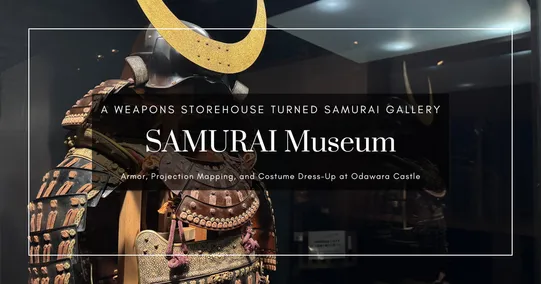
The SAMURAI Museum at Odawara Castle exhibits a wide range of armor and offers dress-up experiences with ninja, samurai armor, and princess costumes. Within easy reach of Tokyo, it is a place where you can have an authentic samurai experience.
Read more about SAMURAI Museum
What the Samurai Left Behind After Laying Down Their Swords

More than 150 years have passed since the Meiji Restoration, and no one walks the streets wearing a sword anymore. Yet the way of life that valued righteousness, practiced respect, and balanced both scholarship and martial skill has seeped into the very soil of Japan.
It lives in the stone walls of castles, in the stillness of a tea room, and in the simple gesture of cradling a tea bowl with both hands.
When you visit historical sites in Japan, take a moment to feel the footsteps of the samurai.

References
- National Archives of Japan — Haitōrei (Sword Abolishment Edict)
- National Diet Library — Nitobe Inazō
- Japan Arts Council — History of Noh
