What Is a Ninja? History, Ninjutsu, and the Real Shinobi of Feudal Japan

Contents
The Other Operatives Who Lived in the Shadows

Japan, the land of the samurai.
In the very same era when sword-bearing samurai charged across battlefields, there were others who never showed their faces, never announced their names, and carried out their missions from the shadows.
They were the ninja.
“Ninja” is now a word recognized worldwide. Through movies, anime, and video games, almost everyone has heard the name.
But what were the real ninja actually like?
This article explores the history and true nature of the ninja from every angle.
What Is a Ninja? — Etymology and Their True Role

The word “ninja” only came into common use from the late 1950s onward. It is a relatively modern term that spread through novels and films.
During the era when ninja were actually active, they were primarily called shinobi. The word derives from the classical Japanese verb shinobu, meaning “to conceal oneself” or “to endure.”
They went by many names depending on the region and period.
| Name | Reading | Meaning and Origin |
|---|---|---|
| Shinobi | shinobi | The most common term. Derived from shinobu (to conceal) |
| Kusa | kusa | Refers to deep - cover spies who infiltrated enemy territory for extended periods |
| Suppa | suppa | Said to be the origin of the verb suppanuku (to expose). Means one who deceives |
| Rappa | rappa | Means one who confounds the enemy |
| Nokizaru | nokizaru | Means one who moves through attics like a monkey |
In modern terms, ninja were spies, intelligence operatives, and covert agents.
Their primary mission was intelligence gathering — probing the enemy’s military strength, castle layouts, and political movements, then reporting back to their lord. Beyond that, they conducted sabotage such as destroying bridges and setting fire to food stores, waged psychological warfare by spreading disinformation, and occasionally carried out targeted eliminations.
In stark contrast to samurai, who fought openly on the battlefield, ninja operated from the shadows and erased all traces once a mission was complete. That was their way.
History of the Ninja — From Birth to Disappearance

Working behind the scenes for aristocrats and samurai, ninja eventually became indispensable to the feudal lords of the Warring States period, only to fade away with the changing times. Here is their story, era by era.
Origins: Self-Defense Techniques of the Iga Samurai (Kamakura to Muromachi Periods)
The oldest confirmed record of ninja activity appears in the Taiheiki, a military chronicle compiled during the Northern and Southern Courts period (late 14th century). It describes shinobi setting fire to enemy encampments.
The birth of the ninja was rooted in the unique geography of Iga Province (present-day Iga and Nabari cities in Mie Prefecture). In this mountain-ringed basin where the provincial governor’s authority barely reached, minor lords vied for power and clashed constantly.
The people honed guerrilla tactics to defend themselves, developing the arts of reconnaissance and infiltration. This was the prototype of ninjutsu. In neighboring Koka (present-day Koka and Konan cities in Shiga Prefecture), a distinct tradition of ninjutsu evolved under the influence of Shugendo — a syncretic practice combining mountain worship, esoteric Buddhism, and Shinto asceticism.
The Tensho Iga War: Ninja vs. Oda Nobunaga (Warring States Period)
During the Warring States period, the Iga samurai — who served no feudal lord and defended their own land — formed a self-governing league known as the Iga Sokoku Ikki. Although ikki is often associated with armed rebellion, the word originally means “to unite in common cause.” The Iga Sokoku Ikki was a self-governing body in which samurai managed the province through collective decision-making.
The man who threatened this autonomy was Oda Nobunaga, who sought to unify all of Japan.
In 1579, Nobunaga’s second son Nobukatsu invaded Iga. However, the Iga ninja, intimately familiar with the mountainous terrain, overwhelmed Nobukatsu’s forces with ambushes and guerrilla tactics, inflicting a crushing defeat (First Tensho Iga War).
In 1581, Nobunaga assembled an army of roughly 50,000 troops from multiple corps, including Nobukatsu, and surrounded Iga from all sides. Faced with overwhelming numbers, Iga’s self-governance collapsed (Second Tensho Iga War).
Shinkun Igagoe: The Ninja Who Saved Tokugawa Ieyasu’s Life
There was a moment when the Iga ninja stepped onto the stage of history.
In 1582, Tokugawa Ieyasu was sightseeing in Sakai at the invitation of Oda Nobunaga. He was accompanied by only about 30 retainers — no army. In the midst of this unguarded journey, word arrived that Nobunaga had been killed at Honno-ji temple. As one of Nobunaga’s most important allies, Ieyasu risked being targeted by the traitor Akechi Mitsuhide. He urgently set out to escape through Iga back to his home province of Mikawa (present-day eastern Aichi Prefecture).
During this harrowing escape known as Shinkun Igagoe, ninja from Iga and Koka are said to have guided Ieyasu to safety. In recognition of this service, the Iga ninja were later taken into the employ of the Tokugawa shogunate.
Ninja in the Edo Period: The Oniwaban and the Shogunate’s Secret Agents
Partly thanks to their role in the Igagoe escape, Iga ninja were employed by the Edo shogunate as Igagumi Doshin — members of the Iga corps assigned to guard Edo Castle. The castle gate where they were stationed came to be called Hanzo-mon Gate, named after Hattori Hanzo, who led the Iga corps. This gate still stands at the Imperial Palace in Tokyo and is the origin of the Hanzo-mon Station and Hanzo-mon Line on the Tokyo Metro.
The most notable intelligence operation of the Edo period was the Oniwaban, established by the eighth shogun, Tokugawa Yoshimune. Originating from a group of retainers whom Yoshimune had secretly tasked with intelligence gathering when he was lord of Kishu domain, the Oniwaban ostensibly served as garden guards but in reality reported directly to the shogun as covert intelligence gatherers. Whether they were direct successors of the ninja lineage is debated, but in terms of clandestine operations, they carried on the shinobi tradition. The Oniwaban continued to operate until the end of the shogunate.
The End: Shadow Operatives Vanish with the Meiji Restoration
During the roughly 260 years of peace in the Edo period, demand for ninja gradually declined. When the shogunate fell with the Meiji Restoration of 1868, a modern army, navy, and police force were established, and the role of the ninja came to a definitive end.
Iga and Koka — The Two Great Ninja Heartlands

Any discussion of ninja must include the two great traditions of Iga and Koka. Although movies and other popular media frequently portray them as bitter rivals, the reality was quite different.
Brothers Separated by a Single Mountain
Iga and Koka were in fact neighboring regions separated by just one mountain range, maintaining such close ties that they were called Ko-I Ikkoku — literally “Koka and Iga as one land.” Intermarriage was common, and the image of them as arch-enemies is a later invention of popular culture.
Differences Between the Iga and Koka Traditions
The two did differ in organizational structure and areas of expertise.
| Category | Iga Tradition | Koka Tradition |
|---|---|---|
| Base | Iga and Nabari cities, Mie Prefecture | Koka and Konan cities, Shiga Prefecture |
| Organization | Multiple competing schools with high independence | A coalition of 53 families called Gunchu - so, with strong solidarity |
| Decision - making | Collective discussion, but with rivalry among schools | Democratic governance by majority rule |
| Employment | A business - like approach, contracting with multiple clients | A tendency toward sworn loyalty to a single lord |
| Specialty | Excellence in fire techniques (gunpowder and incendiary weapons) | Excellence in pharmaceutical arts (medicine and poisons) |
Japan Heritage: The Ninja Homeland of Iga and Koka
In 2017, Iga and Koka were designated a Japan Heritage site as The Ninja Homeland of Iga and Koka — In Search of the Real Ninja. This region preserves an unparalleled density of castle and fortification ruins, offering a window into the Warring States reality in which minor lords lived in constant vigilance of one another.
Ninjutsu and Ninja Tools — Techniques and Gear Built on Rationality

Ninjutsu was not a supernatural power. It was an eminently rational system of techniques combining keen observation, scientific knowledge, and physical ability.
Seven Disguises (Shichihode): Seven Infiltration Personas
Shichihode is a set of seven disguise techniques recorded in ninjutsu manuals, designed for infiltrating enemy territory. These were sophisticated undercover methods that required mastering the knowledge and mannerisms of each profession.
| Disguise | Rationale |
|---|---|
| Merchant (akindo) | Ideal for intelligence gathering while traveling as an itinerant trader |
| Commoner (tsune no katachi) | The guise of a farmer or townsperson. The least conspicuous |
| Komuso (komuso) | A mendicant monk wearing a deep basket hat that completely conceals the face |
| Buddhist monk (shukke) | Monks had established identities and attracted little suspicion |
| Yamabushi (yamabushi) | A mountain ascetic whose travel through mountain terrain appeared natural. Also drew on knowledge of Shugendo |
| Hokashi (hokashi) | A street performer. Effective for gathering intelligence where crowds gather |
| Sarugaku performer (sarugakushi) | An entertainer who could travel freely from region to region |
Six Essential Tools (Shinobi Rokugu): A Ninja’s Field Kit
Shinobi rokugu are the six tools a ninja should carry, as recorded in the ninjutsu manual Shoninki.
| Tool | Reading | Purpose |
|---|---|---|
| Amigasa | amigasa | A woven hat to conceal the face and shield from sun and rain |
| Kaginawa | kaginawa | A grappling hook and rope for scaling walls and binding objects |
| Sekihitsu | sekihitsu | An easily erasable writing instrument used for coded notes |
| Kusuri | kusuri | Antidotes, stomach remedies, and wound medicines carried in a small case (inro) |
| Sanjaku Tenugui | sanjaku tenugui | A hand towel about 90 cm (3 feet) long, used for tourniquets, binding, and many other purposes |
| Uchitake | uchitake | A bamboo fire - starting tool |
Ninja selected and packed only what they needed for each specific mission.
Shuriken, Caltrops, and the Ninja Sword
Shuriken are synonymous with ninja, yet they were not actually a primary weapon. Their killing power was limited; they were mainly used for distraction, pinning down pursuers, and buying time during an escape. They were also sometimes coated with poison.
Caltrops (makibishi) were spiked devices scattered on the ground to impede pursuers during an escape. They were made not only from iron but sometimes from dried water-caltrop seeds. Ninja would scatter them along escape routes in advance, then run through using a sliding step to avoid them.
The ninja sword (shinobigatana) was a short, straight-bladed weapon with a blade about 40 cm (16 inches) long — roughly half the length of a standard Japanese sword at about 70 cm (28 inches). Its compact design prevented snagging while running, and it had a distinctive secondary use: a ninja could lean the sheathed sword against a wall, step on the scabbard (saya) as a foothold, and vault over fences.
Fire Techniques and Water Techniques
Among the fire techniques that Iga ninja excelled in were the hōri-biya, a thrown incendiary projectile, and the umbi, a timed explosive device buried underground.
The water techniques include the well-known suiton no jutsu — the art of hiding underwater and breathing through a bamboo tube or sword scabbard. There was also a deception technique in which a ninja would hurl a large stone into the water to make pursuers believe they had dived in.
The Real Ninja — Popular Image vs. Historical Record

The techniques and tools we have looked at so far were all grounded in practicality and common sense. There are certainly differences between ninja as seen in movies and anime and the historical reality, but the real ninja are fascinating in their own right.
For example:
The iconic “all-black outfit” instantly comes to mind when you think of ninja, but that image actually originated in Edo-period kabuki theater — a traditional form of Japanese stage drama featuring elaborate costumes and stylized performances. The black costume was a stage convention to instantly signal to the audience, “This character is a ninja.” It was never what real ninja wore on a mission.
So what did actual ninja wear?
The answer is ordinary, unassuming clothes.
As the seven disguises described earlier show, ninja disguised themselves as farmers or merchants to carry out their missions. When operating at night, they wore not pure black but dark navy blue. Under moonlight, dark navy blends into the surrounding darkness more naturally than black. These navy garments were made using the same indigo-dyeing technique used for farm work clothing in the Iga and Koka regions, known as kure-zome.
Ninja as seen in popular culture are captivating in their own way, but the historical ninja — who overcame real-world challenges with ingenuity and skill — are no less compelling.
| Popular Image | Historical Reality |
|---|---|
| Operate in all - black outfits | Disguised as farmers or merchants. Wore dark navy at night |
| Shuriken as a primary weapon | Used for distraction and delay, not as a main weapon |
| Run on walls and walk on water | Practical movement techniques using tools and knowledge |
| Form hand signs to activate special powers | Hand signs were a practice for mental focus and concentration |
| Vanish in a puff of smoke | Smoke bombs did exist, but the goal was escape, not disappearing |
| Superhuman combat ability | Outmatched by samurai in direct combat. Their strength lay in ambush and stealth |
The Three Great Ninjutsu Manuals — Ancient Texts Distilling the Wisdom of the Shinobi

The techniques and philosophy of the ninja were compiled into three major texts during the Edo period.
Bansenshukai
The Bansenshukai was a monumental 22-volume work compiled in 1676 by Fujibayashi Yasutake. True to its title — “Collecting Ten Thousand Rivers into the Sea” — it consolidated the ninjutsu of 49 schools from Iga and Koka into a single comprehensive reference. Covering everything from the spiritual principles of ninjutsu to practical techniques, it is essentially an encyclopedia of ninjutsu.
Shoninki
The Shoninki is a three-volume ninjutsu manual written in 1681 by Natori Masazumi, a military scholar of the Kishu domain. It covers ninja techniques, methods for countering enemy psychology, and the deeper principles of the ninja mindset. It is a highly respected text, known as the source for the six essential tools and seven disguises discussed earlier.
Ninpiden
The Ninpiden is a four-volume ninjutsu manual said to have been written by the first Hattori Hanzo (Yasunaga) and passed down to the second-generation Masanari. Unlike the Bansenshukai and Shoninki, which emphasize theory, the Ninpiden is a practical field manual that provides concrete instruction on fire techniques, ninja tools, disguise methods, and espionage — placing action above theory.
Samurai and Ninja — Two Forces of the Same Era

Samurai and ninja are often contrasted, but they were never enemies. For a feudal lord, the samurai were the regular army that fought in the open, while ninja handled intelligence and covert operations behind the scenes. It was precisely this two-pillar system that allowed lords to wage war effectively.
Let us compare the two.
| Category | Samurai | Ninja |
|---|---|---|
| Social status | Highest rank of the ruling class | Often of lower social standing |
| Fighting style | Open, honorable combat | Stealth operations, ambushes, guerrilla tactics |
| Guiding principle | Honor and loyalty based on Bushido | Mission completion above all. Leave no name behind |
| Primary weapons | Japanese sword, bow, spear | Ninja sword, shuriken, a wide variety of specialized tools |
| Strongest arena | Pitched battles, single combat | Infiltration, escape, information warfare |
| Legacy in history | Names inscribed in the historical record | Leaving no trace was the ideal |
Their positions and methods of fighting could not have been more different, yet it was precisely because there were those who fought openly on the front lines and those who gathered intelligence and carried out covert operations behind the scenes that Japan’s Warring States period unfolded as it did.
The World’s Fascination with Ninja — Ninja in Modern Culture

The historical ninja have vanished, yet “ninja” as a cultural icon continues to captivate audiences around the world. How did this global popularity come about? Let us trace that history.
Hollywood Ignites the Ninja Boom
In the 1980s, Japanese action star Sho Kosugi rose to prominence with his appearance in the Hollywood film Enter the Ninja (1981). Following the kung fu boom that Bruce Lee had built, “ninja” took hold as a new kind of Asian hero in Western cinema.
What is particularly interesting is that Hollywood’s “NINJA” evolved into something quite different from the Japanese original. The image of ninja wielding nunchaku and tonfa was born in movies — these were never authentic ninja weapons.
NARUTO Accelerates Worldwide Popularity
The manga NARUTO by Masashi Kishimoto (serialized 1999 to 2014), with over 250 million copies in circulation worldwide, became a massive hit that further elevated international fascination with ninja.
In 2024, the Japanese original drama series Shinobi no Ie: House of Ninjas debuted on Netflix, generating a major global response.
Ninja Day (February 22)
Every year, February 22 is celebrated as Ninja Day. The date was chosen through wordplay — in Japanese, the number 2 can be read as nin, so 2/22 becomes “Nin-Nin-Nin.” The period from February 2 to February 22 is designated Ninja Month, with ninja-themed events held across Japan.
You can find information about Ninja Day and Ninja Month events on the official Ninja Day website.
Where to Experience Ninja Culture in Japan

Throwing shuriken, exploring the trick mechanisms of a ninja house, viewing exhibits of ninja tools and historical manuals — there are spots throughout Japan where you can experience ninja culture firsthand.
| Spot | Area | Experience |
|---|---|---|
| EDO WONDERLAND Nikko Edomura | Nikko, Tochigi Prefecture | Ninja stage shows, strolling through an Edo - period town in ninja costume |
| SAMURAI NINJA MUSEUM | Tokyo (Asakusa / Shinjuku), Kyoto | Ninja history exhibits, shuriken throwing experience, photo shoots in ninja costume |
| Ninja Trick House | Shinjuku, Tokyo | Trick ninja house, shuriken throwing, sword techniques. About 40 minutes |
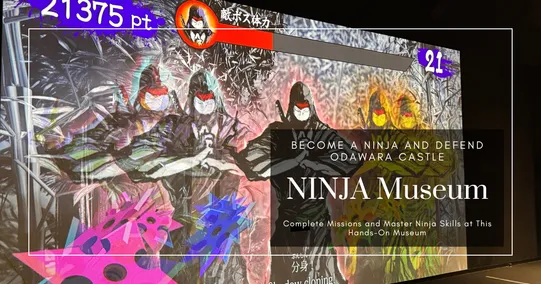
| Odawara Castle NINJA Museum | Odawara, Kanagawa Prefecture | Interactive exhibits themed around the Fuma ninja clan. Infiltration and stealth technique experiences, immersive theater |
| Oshino Shinobi no Sato | Oshino Village, Yamanashi Prefecture | Ninja shows at the foot of Mt. Fuji, ninjutsu training hall, shuriken throwing, ninja costume rental |
| Koka-ryu Ninjutsu Yashiki | Koka, Shiga Prefecture | Tour an Edo - period ninja house. Hands - on trick mechanism experience, shuriken throwing, exhibits of ninja tools and historical documents |
| Koka no Sato Ninjutsu Mura | Koka, Shiga Prefecture | Ninja training hall (daily sessions), hands - on workshop (reservation required) |
| Iga-ryu Ninja Museum | Iga, Mie Prefecture | Live demonstrations in a trick ninja house, shuriken throwing experience (6 shuriken for 300 yen, about $2 USD), live ninjutsu performance show |
| Uzumasa Eigamura | Kyoto | Ninja show NINJA MISSION, trick ninja house, 3D maze Ninja no Toride |
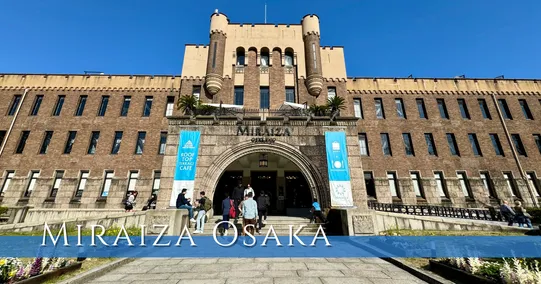
| Shinobi-ya Shuriken Dojo (inside MIRAIZA Osaka Castle) | Osaka | Learn shuriken throwing techniques and try them yourself. Ninja and samurai goods also available |
Ninja experience facilities can be found in major cities including Tokyo, Kyoto, and Osaka, where you can casually enjoy shuriken throwing and dressing up in ninja attire. Some spots, like the NINJA Museum at Odawara Castle, let you combine castle sightseeing with ninja culture.
If you want to visit the true heartland of the ninja, head to Iga or Koka. The Koka-ryu Ninjutsu Yashiki stands out in particular — it is not a theme park but a genuine ninja house built during the Edo period that still survives today. You can experience the actual trick mechanisms, including trap doors and revolving walls.
Those Who Stayed in the Shadows and Moved History

While samurai staked their lives on honor, ninja placed the highest priority on survival itself. Gather intelligence, analyze it, adapt to the situation. Complete the mission, erase all traces, and depart without leaving a name. This relentless rationality was the essence of the ninja.
Not flashy techniques or superhuman powers, but the art of surviving through observation, knowledge, and adaptability. That was the way of these other operatives.
Even though they never stood on the stage of history, there are countless turning points that would not have happened without the ninja. Centuries later, they continue to captivate people around the world. That allure will never fade.

References
- Mie University International Ninja Research Center
- National Diet Library: NINJA — Image and Reality
- Iga - ryu Ninja Museum: What Is a Ninja?
