- Miyazaki
- Nichinan City
- Tourism
- Shrine
- Nationally designated Places of Scenic Beauty
- Natural Monument
- Japan's Three Great Descending Shrines
Udo Jingu Shrine Guide: Miyazaki's Cliffside Shrine Built Inside a Sea Cave

Contents
A Dramatic Cliffside Shrine You Walk Down to Reach
Explore the Highlights of Udo Jingu Shrine
Udo Jingu Shrine in Nichinan, Miyazaki Prefecture is remarkable for having its main hall located inside a natural sea cave carved into steep cliffs.
Its rare “descending shrine” layout, a coastal approach overlooking the Pacific Ocean, and the popular Undama stone-throwing ritual create a memorable experience found at few other shrines in Japan.
This article introduces the main highlights of Udo Jingu Shrine.
Udo Jingu Shrine

Udo Jingu Shrine sits atop dramatic cliffs facing the Hyuga Sea in Nichinan, Miyazaki Prefecture. The enshrined deity is Ugayafukiaezu no Mikoto, father of Emperor Jinmu, Japan’s legendary first emperor. The shrine is traditionally associated with blessings for safe childbirth, child-rearing, matchmaking, marital harmony, and maritime safety, attracting worshippers for centuries.
| Item | Details |
|---|---|
| Address | 3232 Miyaura, Nichinan City, Miyazaki Prefecture |
| Phone Number | 0987-29-1001 |
| Visiting Hours | 6:00 am - 6:00 pm |
| Admission | Free |
| Closed | Open all year |
| Official Website | https://www.udojingu.or.jp/ |
One of Japan’s Three “Descending Shrines”
An Unusual Approach Where You Walk Down to the Main Hall
The most distinctive feature of Udo Jingu Shrine is its rare layout as a “descending shrine.”
At most shrines, visitors climb stairs upward to reach the main hall. Udo Jingu is the opposite—worshippers descend a long flight of stairs toward the sea cave. Along with Nukisaki Shrine in Gunma and Kusakabe Yoshimi Shrine in Kumamoto, it is known as one of “Japan’s Three Descending Shrines.”

The vivid vermilion steps and railings follow the cliffside into the cave below. As you walk down, you can enjoy sweeping views of rugged rocks and the Pacific Ocean—an experience unique to this rare shrine structure.

A Sacred Main Hall Hidden Inside a Sea Cave
The main hall of Udo Jingu Shrine stands deep inside a natural sea cave carved into sheer cliffs. The vermilion structure nestled within the rock chamber creates an atmosphere unlike any other.

According to mythology, this cave is the site where Toyotama-hime gave birth to her child. This unique setting is closely associated with the shrine’s blessings for safe childbirth and child-rearing.
Inside the cave, the air becomes calm and quiet, creating a deeply sacred atmosphere for worship.

Vermilion Railings and Pacific Ocean Views Along the Scenic Path
The approach to the main hall offers scenic views throughout your walk.

Vermilion railings run along the right side of the path, with the Pacific Ocean spreading out beyond them. The striking contrast between the vivid red and the deep blue of the sea is one of Udo Jingu Shrine’s signature sights.

Stone lanterns line parts of the walkway, adding an elegant shrine atmosphere. Subtropical plants such as sago palms thrive along the cliffs, creating a distinctly southern, Miyazaki-like landscape.

Try Your Luck: Throwing “Undama” Stones at the Turtle Rock
Udo Jingu Shrine is famous for its unique fortune ritual called Undama Nage (lucky stone throwing).

Visitors aim to throw small clay balls—called “Undama”—into a hollow on the back of the sacred Turtle Rock located below the cliff in front of the main hall. If the stone lands in the hollow, it is said that your wish will come true. Many visitors enjoy giving it a try.


Undama stones are sold in sets of five for ¥200. Men throw with their left hand, while women throw with their right hand. Aiming from a cliffside viewpoint toward the rock below makes this ritual especially exciting.
Because the stones can easily be affected by wind, the challenge is surprisingly difficult—but that only makes it more satisfying when one lands perfectly. It’s a memorable experience and highly recommended during your visit.

Sacred Symbols of Safe Childbirth and Child-Rearing:
The “Ochi-iwa” and “Ochi-mizu”
Deep inside the cave behind the main hall is a sacred rock formation known as Ochi-iwa, which draws many visitors praying for childbirth and child-rearing blessings.
The rock resembles two breasts hanging from the ceiling. According to legend, when Toyotama-hime returned to the sea after giving birth, she left behind her two breasts on this rock, providing nourishment for her child.

Water that drips from the rock is known as Ochi-mizu. Candy made using this water—called Ochi-chi Ame—is a popular local specialty connected to prayers for healthy childbirth and child-raising.

Dramatic Coastal Scenery of Cliffs and Unique Rock Formations
Udo Jingu Shrine is more than a place of worship—it is a stunning scenic spot overlooking the Pacific Ocean.
From various locations along the approach and shrine grounds, visitors can enjoy views of steep cliffs, rugged rock formations, and waves crashing dramatically against the shore. The rocky coast, shaped by the ocean over thousands of years, offers impressive natural beauty.

The force of the waves striking the rocks is especially powerful, offering a vivid sense of nature’s energy.

From higher viewpoints, you can look down over the main hall area and see the entire complex built tightly against the cliffside. These overlooks showcase the dramatic scale of Udo Jingu Shrine.

How to Get to Udo Jingu Shrine
Most visitors reach Udo Jingu Shrine by car. You can also access it using a combination of train and bus, or by taking local buses directly.
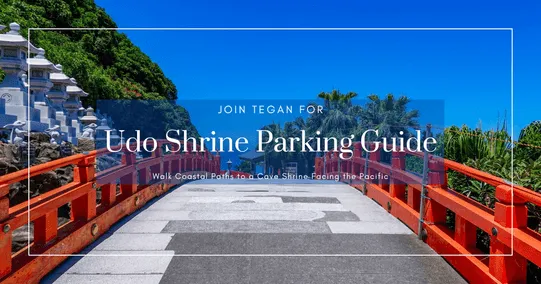
By car, the shrine is about 50 minutes from central Miyazaki City. Several free parking areas are available near the shrine. For detailed information on parking locations and congestion, see the article below:
Read more about 鵜戸神宮の無料駐車場
If you are using public transportation: From Obi or areas south, take the JR Nichinan Line to Aburatsu Station, then transfer to a bus (about 20 minutes). From Miyazaki City, buses bound for Obi depart from Miyazaki Station and stop at Udo Jingu Shrine. Because the number of buses is limited, be sure to check the timetable in advance.
Miyakoh BusCliffs × Cave × Ocean Views
A One-of-a-Kind Experience at Udo Jingu Shrine

Udo Jingu Shrine stands out for its rare descending layout, sacred sea cave main hall, Undama stone-throwing ritual, and dramatic views of the Pacific Ocean. Few shrines combine so many unique elements, making it a place where visitors can enjoy both spiritual and scenic experiences.
The visit typically takes about one hour just for worship. If you explore the souvenir shops and café near the entrance, plan for about 1.5 to 2 hours.
When visiting Miyazaki, consider adding Udo Jingu Shrine to your itinerary.
